Thursday, 31 January 2013

Class activities for raising students' awareness of the importance of online safety

Dave Mainwood on his EFL Smart blog has created a series of good lesson plans that you can use for this.


I've had quite some success using Exposed (CEOP Video - Staying Safe Online) with various age groups of students (teenagers+) from intermediate upwards.
This lesson plan gets students to:

  • watch a film about internet safety
  • do some gap-fill and matching exercises
  • practise present simple
  • discuss ways to stay safe online
It centres on a well-made, engaging video where a teenage student gets hounded by her classmates because her boyfriend lets compromising photos of her get published on a social media site. I've found that students react positively to the video and the pre and post-viewing activities work well.

Sexting: is technology endangering teenagers?
This lesson plan gets students to:
  • listen to a radio debate on teenagers and technology
  • discuss the dangers and benefits of new technologies
  • do a sentence matching exercise
  • prepare and write an IELTS style question on the subject
It centres on a radio debate on sexting - using a smartphone to send indecent images to to others. This leads to a discussion about whether teenagers should be prevented from using these technologies or whether they should be trusted to develop their self-awareness of these types of gadgets. There are accompanying online activities that focus on language and comprehension plus the optional follow up writing task.

Should parents follow their children on facebook?
This lesson plan gets students to:
  • discuss social networks
  • listen to teenagers discussing social networks
  • listen to some teenagers and parents talking about their online relationships and to order their comments
  • look at some language used for writing - connectives
  • write a discursive essay on the topic


Wednesday, 24 October 2012

jigsaw thingy

grab and move the pieces
to restart: go to the cog select scatter and off you go
use chrome in classrooms.


join jigsawplanet.com

upload an image
choose number of pieces
easy or difficult
remember link
exploit in class
and bob's not your dad


and here´s one for richard ...

Tuesday, 23 October 2012

Halloween for teenage and adult learners:


– A Hallowe'en listening activity: finding out about the traditional festival of Hallowe'en.
http://bit.ly/PgTH9s
– Getting your teenage students into the Halloween mood: have them read and discuss this article on apps: “BE WARNED: Insanely addictive!”
http://bit.ly/WD034J And to try out and report back to class on the Doodle Jump app described in the article
https://itunes.apple.com/us/app/doodle-jump/id307727765?mt=8

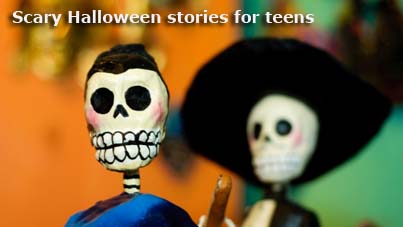
– Scary Halloween stories for teens: – Day of the Dead
http://bit.ly/RnwnTM – The text http://bit.ly/VtKqNE


– From our pacey, entertaining World on the Street video series:
Ashlie and Stephen decide which Halloween costumes to choose
http://bit.ly/S9EEN6
And Rob, our language expert, looks at the different ways we use the verb “think”.
http://bit.ly/R9zdxQ With supporting online activities

Ashlie and Stephen's house is full of witches, wizards, and ghosts... and everyone's having a frighteningly good time!
http://bit.ly/R9zCjA
And Rob looks at how we use personal pronouns
http://bit.ly/PHS5Fw With supporting online activities


Halloween for young learners


Preparing for Halloween:
– How to organise a Halloween party
http://bit.ly/TalQOB

– Make a skeleton
http://bit.ly/RnvLgU

– Free, downloadable Halloween flashcards
http://bit.ly/Pj9LHC

– With this Pron Pal download your students can listen to the Halloween words and phrases and record their own voice
http://bit.ly/RQrQsi


Class activities:
– The history of Halloween quiz worksheet
http://bit.ly/Rf4xth

– Students watch a video and learn how to make a spider mobile for their bedroom - or for their friend.
http://bit.ly/XJ2KzP
– Students read about and draw a haunted house.
http://bit.ly/Vj53Gz

– Match the Halloween words to the picture
http://bit.ly/Tam9sF

– Label the skeleton's body
http://bit.ly/RnvzOP
– The scary skeleton song
http://bit.ly/TrI68p

– Which Halloween costume do your students think is the scariest?
http://bit.ly/TC3H8g

– A witch is making a magic spell. She's putting some strange things in her pot! Can your students colour the five scary animals in this picture?
http://bit.ly/VfpJ2m

– Your turn: a chance for your young learners to share their ideas on Halloween with other students from all over the world
http://bit.ly/ORvViN


Wednesday, 25 July 2012

Olympic activities


Martin Sketchley has put together a great series of activities (Pre-Intermediate+)
to coincide with the Olympic games. They include:

  • a reading dictation
  • a reading really
  • a who wants to be a Millionaire type Olympics game
There's also a special Olympics set of words to go with the vocabulary game Pic-your-wits that you can play with your students in class or get them to do for homework

Friday, 6 July 2012

Using the vocabulary game Pic-your-wits in class


Use Pic-your-wits to introduce a topic you are working on in class or as support material for it. It will also work well as a standalone activity that energises your class and changes its dynamics. In addition, it can be used by students as a self-study resource or for homework.


Access the game on Facebook or the LearnEnglish Teens site


For lots of ideas how to use it in and out of class go to the TeachingEnglish website

Online activities from Jon Flyn – Charles Dickens’ London – lesson plan based on the game


Level: Upper Intermediate/ Advanced
Location: Computer Classroom
Skills Focus: Reading
Language Activity: Note-taking
Language focus: Used to/ would/ could have
Game: Charles Dickens’ London


To celebrate the bi-centennial anniversary of the birth of Charles Dickens, Digital Play has found a game for you packed full of lovely written text for your learners to practice reading and learn a little bit about what living around the year 1812 would have been like. I’ve got learners to play this game as a straight reader. That is, they read it for their own pleasure but they may use an online dictionary if they really want to. However, this game also works well with note-taking while playing and then later generating sentences that focus on used to and would. Of course, a presentation and a little practice on this language is best before the game particularly if you ask learners to predict what life was like 200 years ago (when Dickens lived). You also have to be sure you’ve covered the main differences between used to and would. Could have sentences come mainly from the game which tells you what you could have done by a certain stage but didn’t.
Preparation
Print of a copy of the Charles Dickens’ London worksheet. Present and practice the target language.
Pre-play
Hangman Charles Dickens on the board and elicit and information about him. (Do your students know who he is?).
Tell them he lived in London 200 years ago and elicit a few used to and would sentences from students about him. Hand out the worksheet and in pairs learners make a few predictions.
Play
Learners take the worksheet to the computer room and sit in pairs (player and note-taker)
Learners find the game. (Google – Charles Dickens London game).
Stress they need to play the game and take notes. The first person to finish note taking can play and do no writing. If you see a pair playing and not note-taking click on the refresh button at the top – they restart the game. One learner plays the game while the other takes notes. Change every 5 minutes or so. Monitor and elicit sentences verbally from learners who use their notes.
Post Play
Learners compare notes and expand on their own if necessary.
Learners make sentences using their notes and target language.
Learners write a composition about Life in Charles Dickens London.

If you like this lesson plan, check out the Digital Play blog for lots more!